

The Workhorse of the Shop Power Tools
Power tools are handheld and powered by internal combustion, electricity, or compressed air. They can be used for cutting, drilling and sanding materials.
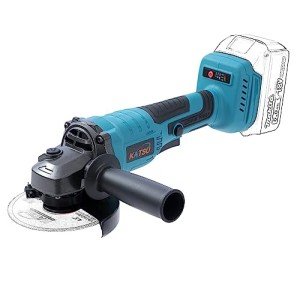
One of the first power tools every woodworker should have is a tablesaw, which makes quick work of nearly any cutting task. Also consider a miter-saw stand and a drill/driver set.
Table Saw
A table saw is the workhorse of the shop power tools and perhaps the most versatile tool for woodworking. It can cut stock cross-cutting it, miter it, and even dado or rabbet it. It can also cut angled surfaces for chests, frames or planters.
The saw has a large circular blade that spins at high speed. The saw has large tables that support the stock while it moves through the blade. Blade guards protect the saw blade, preventing wood from being caught and then thrown back to the operator. The saw is further protected by a splitter, or the riving blade. This is a vertical projection directly behind the blade that can be shaped like pin or fin.
Table saws designed for contractors feature a larger motor that hinges off the rear of the saw and drives the blade using one or two rubber v-belts. These saws are used primarily by carpenters, but they can also be found in home shops. They have more features than portable saws, for instance a sliding miter table.
Table saws with smaller sizes have a lighter motor that is usually driven by belt. These saws are more targeted towards the hobbyist and home use. Many have a sliding mitertable, which lets users make more complex cuts, like those needed for picture and mirror frames, boxes or drawers.
Making use of a table saw in a safe manner is crucial to avoid injuries. Always stand to the left of the blade when you are making rip cuts and keep your hands away from the edge of the saw. When cutting, it's crucial to utilize a guide block or push stick. This is particularly important in commercial settings where HSE standards demand that you keep at least one hand away from the blade.
A simple, adjustable tapering tool that you can make yourself is the fastest and easiest way to cut tapered legs for many woodworking projects. A tapering jig is adjusted to any angle between 0 and 15 degrees, allowing you to cut any set of tapered legs for furniture such as cabinets or tables in your shop.
Bandsaw
Bandsaws can be used to cut metal and wood into different shapes. It is a great tool for custom fabrication. It's also a useful tool for woodworking projects such as cabinetry and furniture. The saw is able to be used to cut cutting curved cuts like circles and is able to cut through various materials, including ice.
There are two main types of bandsaws: horizontal and vertical. Vertical bandsaws are excellent in cutting curved cuts, resawing and freehand cutting. Horizontal bandsaws produce a more straight and angled cut. The saw can be operated manually or with a powered feed system. Manual bandsaws require the user to manually lower and raise the blade for each cut, whereas power fed systems are more efficient.
Safety is the most important factor when working with a bandsaw. Wear protective gear such as safety glasses or ear protection to shield yourself from dust and noise. Keep your feet and hands away from the saw to avoid accidents and injuries. It is also essential to set up the saw correctly to ensure safe operation. Make sure that the blade and guides are properly aligned and that the blade is secured.
Depending on the type of material you are cutting, you may have to adjust the feed rate and speed to achieve the best results. Regular maintenance and adjustments to blade tension and tracking will ensure that your bandsaw makes precise and clear cuts while prolonging its lifespan.
The blade of a bandsaw will usually be made from heat-treated steel to resist the wear and tear that is caused with regular use. The teeth are also welded onto the saw which gives it a unique shape and preventing them from being pulled loose or damaged by a sudden shock.
The throat depth of a bandsaw determines the width of a piece of wood it can cut. Larger throat depths enable you to cut larger pieces of lumber and are useful for resawing and cutting, which are both methods that require cutting across the grain. Some bandsaws have tilting tables which can be used to create cut angles and reuse scrap wood.
Dust Collector
Woodworking tools create a lot of chips and dust, which must be collected in order to protect your health and keep your shop clean. shop as well as the durability of your equipment. The kind of collector you require will depend on the number and size of power tools you use in your woodshop as depending on the frequency at which they are used. The best woodworking dust collectors provide exceptional filtration that will remove fine particles from the air and allow you to breathe healthier, cleaner and more relaxed while you work.
No matter if you're a one-man workshop or a large production woodworking facility, Nederman has dust collection solutions that meet your needs. Our woodworking dust collection, waste management and combustible dust solutions combine care for the environment and improvements in machine productivity and quality.
There are many kinds of woodshop dust collectors on the market including:
A basic dust extractor is an extremely effective tool that could replace a shop vacuum. The units connect to your power tools via the hose that connects the dust port on your machine. When you turn on your tool, the hose activates and draws dust and debris from your workspace.
Most dust extractors, depending on the brand that you select, come with an HEPA filter to remove fine dust particles which can cause respiratory problems over time. They also usually come with a higher CFM (cubic feet per minute) airflow, which allows for an increased amount of air. They could also include an airspeed indicator and a system which automatically cleans the filters.
If you have a larger shop or would like the added flexibility to use your woodworking tools on the go, consider a portable woodshop dust collector with an rechargeable battery as well as a plug-in connection that can be connected directly to the power tool. power tool shop near me are simple to carry and are able to handle multiple tools at a time. These units are compact and come with a caster base. They also have a collection filter or bag for easy emptying.
If you're an experienced woodworker or contractor, you may need an even more robust dust collection system. These are more expensive than an extractor but provide a wider range of filtration and can be mounted to a wall or placed in their own room. These units can be used to clean the plaster, drywall and other demolition tasks as well as woodworking projects.
Planer
The planer is a power tool that should be in every woodshop ever be without. It might not be the sexiest or flashiest, but it can make one of the biggest improvements in your ability to transform rough lumber into practical and beautiful projects. It can be used to cut boards down to a specific thickness and works on both softwoods and hardwoods. It is also very useful to tackle unwieldy, knotty or bent stock that is difficult to work with using hand tools.
A good quality portable planer could be worth the admission fee to any woodworking shop. You may be able to find a good deal on a planer that's slightly used, but you should pay particular attention to the condition of the cutter head and tables for outfeed and infeed. These items will determine the level of performance your planer will perform and whether or not it will last a long time before it requires replacement parts. If the cutter head isn't of a high quality it will wear out quickly and you may have to replace it within an extremely short period of time.
Many people confuse the planer with the jointer, but they are not the same machine. A jointer can make an entire board straight and flat, whereas the planer will cut the boards to a specific thickness. Some woodworkers employ both machines simultaneously to complete the task. But, they are equally essential for any workshop that handles rough lumber on a regular basis.
If you want to do woodworking with a professional standard and are seeking a reliable piece of equipment that is commercial-grade, then a planer is a good investment. These machines are designed to work in situations where speed of production is more important than the finish of the surface. These machines will save you a amount of time, however you must be careful not to over-load them. They could burn out. They will also need to be maintained in a way that ensures that they are operating in a safe manner. A good shop maintenance routine can go a long way in extending the life of your planer.